Vidyadhari Mata (Bijeshwori)
Vidyadhari Mata is the main attraction of this area. There is a four-sided monastery (Bihar) called Udayagiri Nilaparvat Dharmachakra Mahavihar. In the northwest corner of this monastery, facing east, resides Vidyadhari Mata. On her right and left, the goddesses Bajrabarahi and Bajrayogini are also installed with great significance, which attract devotees. In addition, Khadgayogini is separately placed in the same Kutagar (a special room where deities reside). The presence of these four Yoginis together at one place makes this site a rare and sacred location.
Apart from these, there are also ancient idols of Guhyeshwari Nairatma, Arya Tara, Namasangiti, Siddha Nagarjuna, and others, which further enhance the importance of this site.
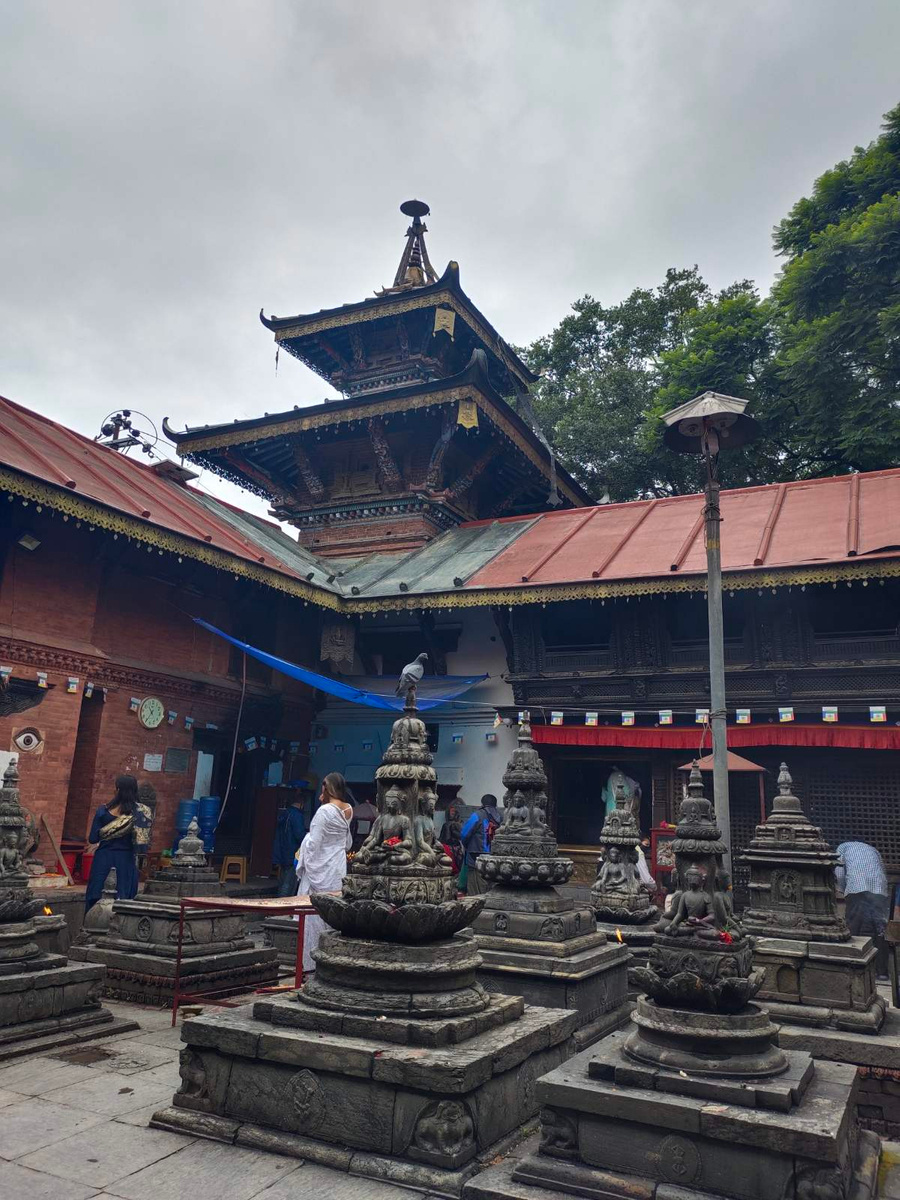
The monastery is built in a traditional cultural heritage style. On the ground floor, there are ritual stupas, pillars, and a circumambulatory path (Kwapachha), along with properly installed deities such as Mahakal, Bajrapani, and Khadgapani according to religious traditions. Traditionally, a Kshetrapal (guardian deity) is placed in the southwest corner of a monastery, and this monastery also follows the same tradition. In the center, there are various stone-structured chaityas.
The upper floor has a copper roof covering three sides, except the western side. In the northwest section where the four Yoginis are placed below a beautifully designed two-tier pagoda-style temple with a spire stands elegantly.
Generally, these four Yogini goddesses are worshipped together or individually following strict Tantric rituals. In some traditions, these deities are kept in private ritual rooms (Agam rooms) and worshiped accordingly. In certain places, it is even restricted for outsiders to view them.
bank of the Bishnumati River, it can be reached by climbing stone steps. The scBijeshwori is also known by other names such as Akash Yogini and Vidyadhari Vijya. The site is open for all visitors without discrimination. Located on a hill on the westernenic elevated surroundings are naturally captivating. Additionally, there are accessible modern roads from the south and west.
This site, where principal deities of Vajrayana Buddhism are enshrined, appears like an open museum and provides a deeply peaceful and blissful atmosphere.
Origin of Vidyadhari Mata
The origin of Vidyadhari Mata is quite interesting. To the east of Kathmandu and south of Bhaktapur, along the road to Nagarkot, there was an ancient administrative center called Panauti (in Panchal Nagar).
In Panauti lived a highly learned scholar named Bajrapad, who had many disciples. Unfortunately, his students never acknowledged or appreciated his virtues. Disheartened by this, Guru Bajrapad left Panauti and came to Kathmandu. He settled at a sacred site on the bank of the Bishnumati River called Nirmal Tirtha, where he devoted himself to meditation.
During his meditation, all resentment towards his disciples gradually disappeared. Eventually, he had a divine vision of a Yogini in the sky. Based on that exact vision, he created a pair of idols and consecrated them with life-force (pran-pratistha).
Meanwhile, his disciples, missing their teacher, set out in search of him. Eventually, they found him at that very place and sought forgiveness for their past disrespect. In memory of this event, the sacred site came to be known as Nirmal Tirtha.